“I did not reject my society. I rejected being owned by it.”
Freedom does not disappear all at once.
It erodes, through rules that seem ordinary, decisions made “for your own good,” and choices that slowly stop being yours.
For some women, the threat is not chaos or lawlessness, but a life managed by others: how to dress, whom to love, when to marry, and when to stay silent.
Nabbaa grew up learning that independence would be treated as defiance. What follows is her story,
not as a symbol, but as a person whose autonomy was gradually taken away.
- When did you first realize that the life expected of you was not the life you wanted?
From a young age, I understood that what was expected of me as a girl did not align with who I was.
My body, my clothing, my voice, all of it was treated as something that needed supervision and correction. I was expected to comply, not to choose.
- What does an ordinary day in your life look like now?
Even ordinary situations are controlled. If there is a family gathering, a picnic, or any social event, there are “rules” about how I must dress and behave. I’m told to choose something “more conservative,” even though what I wear is completely normal, the same clothing most women my age wear.
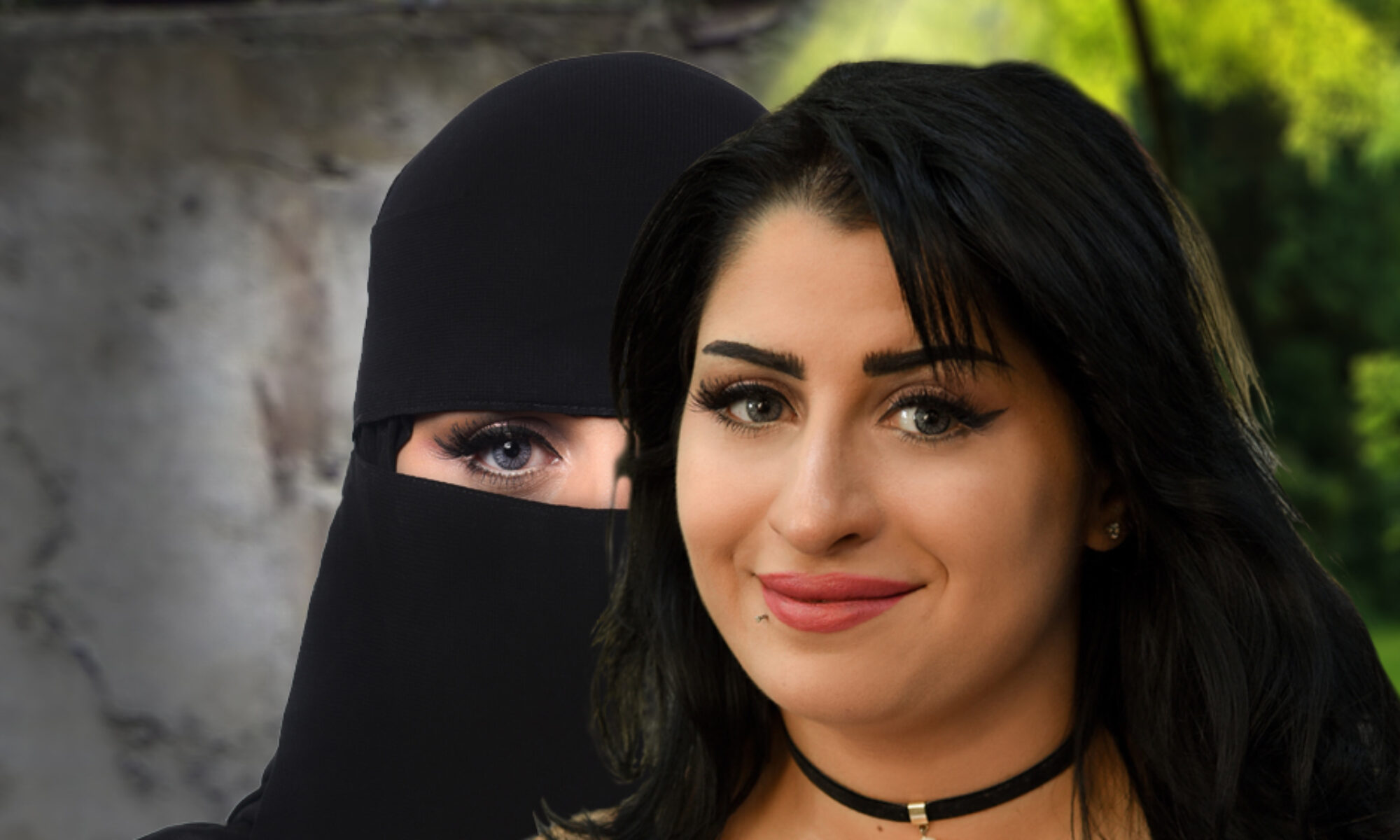
The difference is not the clothes. The difference is that I do not wear hijab.
- How does that difference affect how you are treated?
My sisters who wear hijab are not restricted in the same way. Even if their clothes are tight or modern, it’s accepted. For me, being unveiled is treated as a moral violation no matter what I wear.
There is no logic to it. It’s punishment.
This has followed me since childhood. Arguments, control, constant pressure has created a deep sense of exhaustion and isolation.
- Have these pressures ever crossed into abuse?
Yes. There has always been verbal and psychological abuse, and at times physical force. When I resist or insist on making my own choices, they try to impose theirs on me, even physically.
It teaches you that your body does not belong to you.
- You’ve spoken openly about being atheist. How does that affect your safety?
Rejecting religion as a woman is not seen as a personal belief, it’s seen as a threat. It intensifies control from family and society. Silence is expected. Any form of independence is treated as rebellion.
- While you were living in Germany, did you experience forms of freedom that later became dangerous for you?
Yes. For the first time, I experienced personal freedom, including the freedom to love. I realized that I am part of the LGBT community, something that is impossible to live openly or safely with where I come from.
That realization changed everything.
- How did your family react to that independence?
They saw it as a loss of control. From that moment, the pressure escalated. My independence was no longer something to be tolerated, it was something to be corrected.
- Your family later returned to Iraq. Was that your decision?
No. The decision to return was made by my family, not by me. Even though I had reached adulthood, my wishes were not considered. I did not have the information or support to understand that my situation could have been handled differently.
Returning was not about safety. It was about control.
- What kind of pressure do you face regarding marriage?
Marriage is a constant source of pressure. It is not presented as a choice. When I refuse, the pressure increases, emotionally, psychologically, and socially.
My independence is treated as a problem that needs to be “fixed.”
I know that if I remain where I am, this pressure will not disappear. It will become more forceful over time.
- You’ve mentioned starting a women-centered initiative. Why take that risk?
Because I know I’m not alone. There are many women living under the same systems of control, silence, and fear. If no one speaks, nothing changes, and silence is exactly what is demanded of us.
- If fear and coercion were removed from your life, what would you want to build?
A life where I can think, love, and exist freely. Not as a symbol. Not as a victim. Just as a person with dignity and agency.
- What does freedom mean to you in everyday terms?
It means choosing what to wear.
It means saying “no” without punishment.
It means living without negotiating my existence.
Nabbaa’s story is not exceptional.
What is exceptional is how quietly such lives are allowed to be pushed back into silence.
Why Leaving Is Not Simple
For readers unfamiliar with asylum and migration systems, it is important to understand why someone like Nabbaa cannot simply “leave” an unsafe situation.
Asylum cannot be applied for from outside Europe. A person must first reach the territory, yet legal travel routes are effectively closed to single Iraqi women without significant financial assets or institutional backing. Visa applications are routinely rejected based on risk profiling alone.
This creates a structural paradox: protection is only available after arrival, but arrival is blocked without protection.
Nabbaa previously lived in Germany with her family between 2015 and 2017. Their return to Iraq was not the result of deportation, but a family decision made at a time when she was young, uninformed, and unable to act independently. That history now adds procedural and psychological barriers to seeking safety again.
Living in Erbil does not resolve these risks. It offers neither long-term security nor legal pathways to protection. Economic precarity further limits access to legal advice, mobility, and time, all of which are essential for navigating complex systems.
For many women in similar situations, the problem is not a lack of will to live safely, but a lack of viable routes to do so.


